
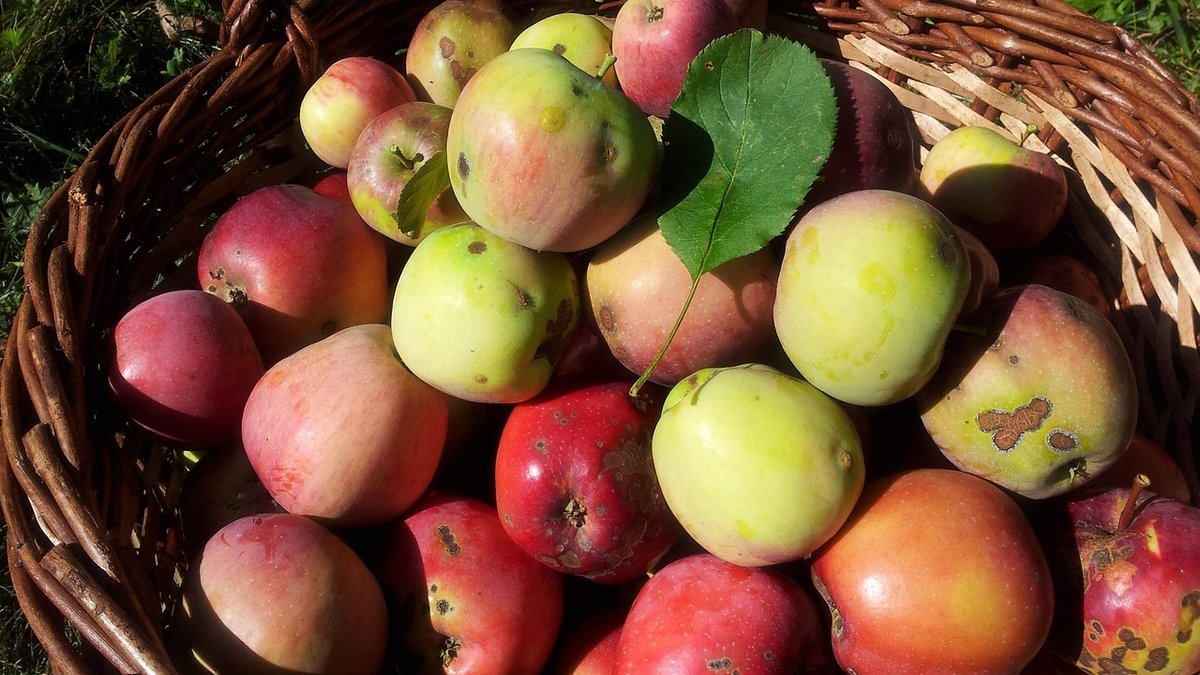
If you have ever walked through an old traditional orchard in late summer — one of those higgledy-piggledy plots of gnarled Bramleys, Egremont Russets and Worcester Pearmains — you will have noticed something. The fruit is rarely flawless. There are scabby patches, a few maggoty windfalls, leaves with holes nibbled out of them. And yet the trees crop year after year, often for a century or more, without anyone reaching for a chemical spray.
That is the model worth copying in your own garden. A healthy orchard is not a sterile one; it is a busy, balanced place where pests and their predators keep each other in check. Your job is less about killing things and more about nudging that balance in your favour. Tolerate a little damage, and you will find you need to intervene far less often.
Aphids are the first pest most of us notice — clusters of greenfly on the soft new growth of apple and plum in May and June. The good news is that they arrive with their own army. A single ladybird larva can eat fifty aphids a day, and lacewing larvae are even greedier.
To keep these predators on site:
If aphids are curling the tips of a young tree, squash them by hand or blast them with water rather than spraying. On established trees, simply leave them — the predators usually arrive within a fortnight.
Half the orchard pest problem lives on the ground. Slugs, snails, codling moth larvae and winter moth pupae all spend part of their life cycle in the soil or leaf litter, and that is where hedgehogs earn their keep. A single hedgehog can take dozens of slugs a night, along with beetles and caterpillars.
Encourage them by leaving a wild, undisturbed corner with a log pile or a purpose-built hedgehog house, and by cutting a 13cm square gap in fence panels so they can move between gardens. Never use slug pellets — they are lethal to hedgehogs and to the thrushes that would otherwise eat your snails.
Birds are equally valuable. Blue tits and great tits time their broods to the caterpillar season and will strip codling moth larvae from bark and foliage. Hang a nest box with a 32mm entrance hole on a tree or shed by February, facing between north and east, and put out mealworms during a cold, wet spring when natural food is scarce. Sparrows and finches will help themselves to buds on occasion, but the net gain is firmly in your favour.
The wingless females of the winter moth and the mottled umber moth crawl up tree trunks in late autumn to lay eggs in the branches. Their caterpillars are the ones that shred young leaves and blossom in spring, often ruining a whole crop of plums or apples.
Grease bands stop them in their tracks. Fit them in mid-October, before the first frosts, wrapping the trunk at about 45cm above ground level. Choose a proprietary grease band or a strip of hessian smeared with horticultural grease, and make sure it sits flush against the bark with no gap behind it — a determined moth will find any bridge. Re-grease in January if it has become clogged with leaves, and remove the band in late May.
While you are at the trunk, check tree ties and rabbit guards. Loose guards harbour overwintering pests, so clear out any debris.
The maggot in your apple is almost certainly a codling moth larva; in plums, it is usually the plum fruit moth. Both are difficult to spot as adults, which is exactly why pheromone traps are so useful. These lure male moths with a synthetic copy of the female's scent, trapping them on a sticky insert.
Hang one trap per tree — or one per three small trees — in mid-May, at head height in the outer canopy, and check it weekly. You are not aiming for eradication; you are gathering information.
Aim to accept around one fruit in ten spoiled. That sounds generous, but it buys you a functioning ecosystem, less work, and fruit that is safe to eat straight from the tree. A few scabs on a Russet or a bit of bitter pit on a Cox are cosmetic; cut them out and enjoy the rest.
Where you do need to act, act precisely. Pick off and destroy infested shoots early, clear fallen fruit from beneath the trees, prune for an open centre so air and birds move freely through the canopy, and mulch with well-rotted compost to build soil life. Encourage wasps in late summer — they are voracious predators of caterpillars when their sweet tooth is satisfied by nearby fruit. Above all, keep records: note which varieties suffer and which shrug pests off. Heritage apples such as Ashmead's Kernel and Ribston Pippin often carry useful natural resistance, and grafting a favourite scion onto a robust rootstock is a fine way to future-proof your orchard.
Work with nature and your trees will reward you for decades.

Hi, my name is Anthony kuber. I am artist and fashion designer.
I love to travel and writing blogging.
Your email address will not be published. Required fields are marked *
Software Developer & Writer
Hey, I'm Diva, a developer and writer blending code and creativity. I'm driven by a deep curiosity and a relentless pursuit of excellence. Join me as I craft digital solutions and captivating stories.


