
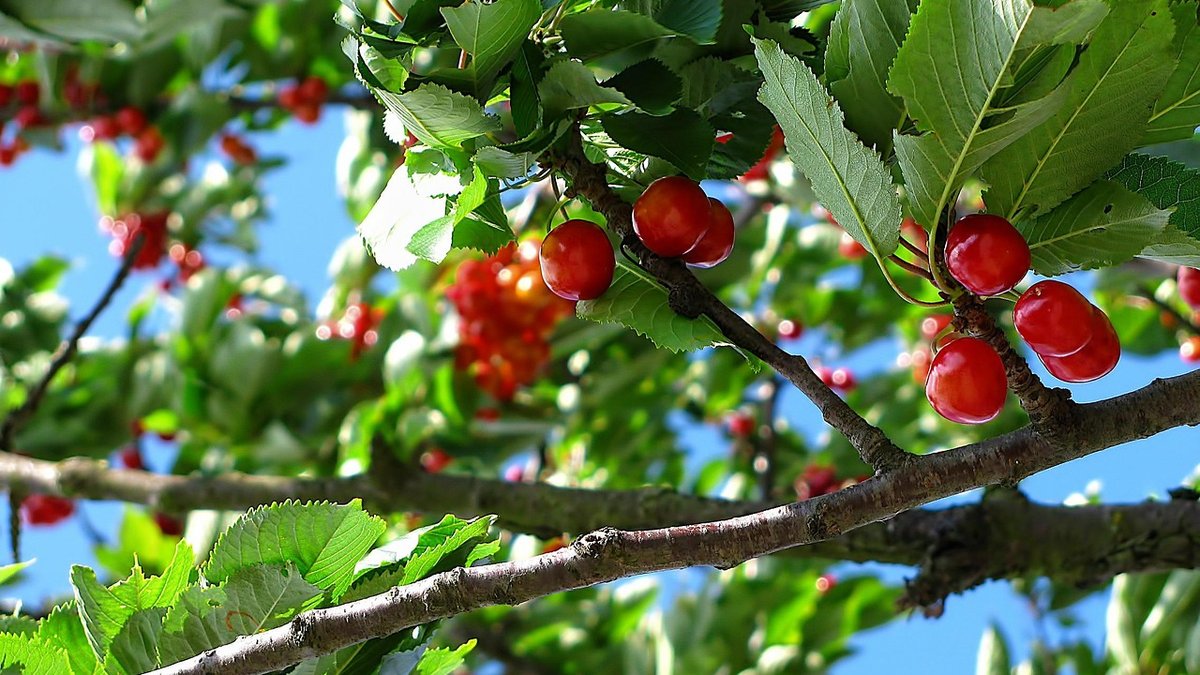
Clay soil is the gardener's perennial complaint, and with good reason. It is heavy, sticky when wet and rock-hard when dry. In winter it holds water like a bucket, leaving roots gasping for oxygen; in summer it cracks and bakes. Young fruit trees planted into unimproved clay often sulk, produce little growth, and can rot at the crown before they ever crop.
But clay is not the enemy. It is naturally fertile, holding nutrients and moisture far better than sandy soil, and once you have improved its structure it can support excellent fruit trees for decades. The trick is to work with it rather than against it, and to choose your rootstocks and planting method with clay firmly in mind.
The single most important thing you can do for clay is to add organic matter — and plenty of it. Well-rotted farmyard manure, garden compost and leafmould open up the soil structure, encouraging the worms and microbes that create drainage channels. Spread a generous layer over the planting area and fork it into the top 20–30cm rather than burying it deep.
Resist the old temptation to dig in sand or grit in quantity. On heavy clay, sand alone can create a concrete-like mix; sharp horticultural grit is more useful, but organic matter does the real work. If your site is genuinely waterlogged for weeks at a time, consider a French drain or a shallow drainage channel before planting anything.
Even improved clay can sit wet through winter, so give your tree a head start by planting it on a low mound. Build up a raised area roughly 15–20cm high and a metre across, using a mix of topsoil and well-rotted compost. Plant the tree into the mound, spreading the roots out naturally.
The critical detail is the graft union — the knobbly join where the variety meets the rootstock. It must sit just above the finished soil level. Bury it, and the tree may rot, sucker, or grow weakly for years. On clay this matters more than on any other soil. Firm the mound gently, stake the tree properly, and water it in well, even if rain is forecast.
Rootstock choice is where clay soil really shapes your orchard. The rootstock dictates how vigorous the tree becomes and how well it tolerates heavy, wet ground.
If you are grafting your own heritage trees, match the rootstock to the site rather than to the catalogue's most fashionable option.
Some older varieties have earned their reputation for toughness over centuries. Among pears, 'Conference' is dependable and crops well even on heavier ground, while 'Beth' stays compact. For plums, 'Czar' tolerates clay better than most, and 'Victoria' remains the reliable standby. Damsons are exceptionally hardy and make wonderful preserves.
Apples on vigorous rootstocks thrive on clay: 'Bramley's Seedling', 'Ashmead's Kernel' and 'Ribston Pippin' all repay good cultivation. Quinces themselves — 'Vranja' and 'Meech's Prolific' — adore heavy soil and are a heritage crop well worth rediscovering, their golden fruit scenting a whole room.
Once planted, mulch each spring with well-rotted manure, keeping it clear of the trunk. Avoid walking on wet clay around the tree, as compaction undoes all your hard work. Prune in winter while the tree is dormant, and check the mound after heavy rain — if it has slumped, rebuild it.
Feed lightly in spring, water deeply in dry spells during the first two summers, and be patient. A tree that establishes slowly on clay will often outlive and out-crop one pampered on sand. With a little preparation, heavy ground can become a productive heritage orchard for a lifetime.

Hi, my name is Anthony kuber. I am artist and fashion designer.
I love to travel and writing blogging.
Your email address will not be published. Required fields are marked *
Software Developer & Writer
Hey, I'm Diva, a developer and writer blending code and creativity. I'm driven by a deep curiosity and a relentless pursuit of excellence. Join me as I craft digital solutions and captivating stories.


