
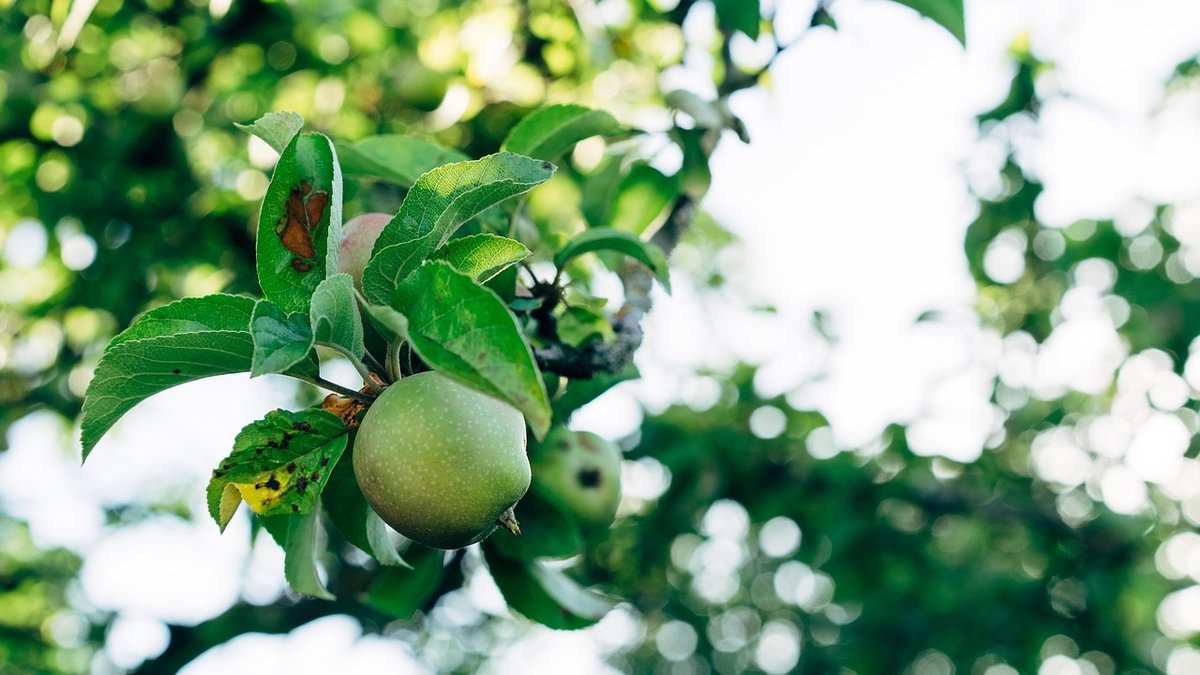
There is something quietly satisfying about planting a bare-root fruit tree. It arrives as little more than a bundle of roots and a slender trunk, yet within a few years it will reward you with blossom, shade and fruit that you simply cannot buy in the shops. The bare-root season runs from late autumn through to early spring, while the tree is dormant. This is the cheapest and often the most successful way to establish apples, pears, plums, cherries and quinces. If you choose a heritage variety, you are also helping to keep a piece of British fruit-growing history alive. Here is how to give your tree the best possible start.
Bare-root trees are lifted from the nursery field when they are asleep, with the soil shaken from their roots. Because they are not grown in a pot, they are lighter, cheaper to buy and easier to transport. More importantly, their roots are not circling around inside a container, so they tend to establish faster once planted. The key is to plant them while they are still dormant. Aim for November to early March, avoiding any spell when the ground is frozen solid or waterlogged. If your tree arrives before you are ready, keep the roots moist. You can heel it in temporarily by laying it in a shallow trench and covering the roots with damp soil or compost. Never let bare roots dry out.
Fruit trees are sun worshippers. Choose a sunny, sheltered position that receives at least six hours of direct sunlight a day during the growing season. A south- or west-facing spot is ideal. Avoid frost pockets, where cold air settles on spring mornings and can damage early blossom. Also steer clear of exposed, windy corners, which can rock young trees and dry out leaves. Free-draining soil is essential. Most fruit trees hate sitting in water, especially over winter. If your soil is heavy clay, improve it with well-rotted manure or garden compost, and consider planting on a slight mound so excess water drains away. If you have very sandy soil, add plenty of organic matter to hold moisture and nutrients.
A little preparation now saves a lot of trouble later. Clear weeds and grass from a circle at least one metre across. Dig a planting hole that is roughly twice the width of the tree's root system but no deeper than the roots need. The aim is to encourage roots to spread sideways, not to sink. If you are planting more than one tree, check the spacing. A bush apple on a dwarfing rootstock may need three to four metres between trees, while a vigorous cooker or a large pear can need six metres or more. Cordons and stepovers can be planted much closer, often just 60 to 90 centimetres apart.
Before planting, inspect the roots. Trim any damaged or broken ones with sharp secateurs. Soak the roots in a bucket of water for about 30 minutes if they look dry, but do not leave them submerged for hours. If you are adding mycorrhizal fungi, follow the packet instructions, though good soil and careful planting matter far more.
Young trees need regular watering during their first spring and summer. In dry spells, give them around ten to twenty litres a week, applied slowly to the root zone. A lack of water is the most common reason newly planted trees fail. Keep the area around the trunk free of grass and weeds, which compete for moisture and nutrients. Watch out for rabbits and deer, which love to nibble young bark. A spiral guard or a small mesh fence will protect the trunk. In late winter, check ties and loosen any that are cutting in. If you planted a heritage apple or pear, remember that many older varieties are not self-fertile. Plant a compatible pollination partner nearby, or choose a self-fertile variety such as Discovery or Lord Derby if space is tight.
Heritage fruit trees offer flavours and stories that modern supermarket varieties rarely match. For apples, consider Egremont Russet with its nutty flesh, Ashmead's Kernel for a sharp, aromatic bite, or Bramley's Seedling for classic cooking. Pears such as Doyenne du Comice and Conference crop well in British gardens. Plums like Victoria and Czar are reliable and generous. Buy from a reputable nursery that sells bare-root trees grown in the UK, and ask about the rootstock. It controls the tree's eventual size, so it matters as much as the variety itself. With a little care at planting time, your bare-root tree will settle in quickly and reward you for decades.

Hi, my name is Anthony kuber. I am artist and fashion designer.
I love to travel and writing blogging.
Your email address will not be published. Required fields are marked *
Software Developer & Writer
Hey, I'm Diva, a developer and writer blending code and creativity. I'm driven by a deep curiosity and a relentless pursuit of excellence. Join me as I craft digital solutions and captivating stories.


