
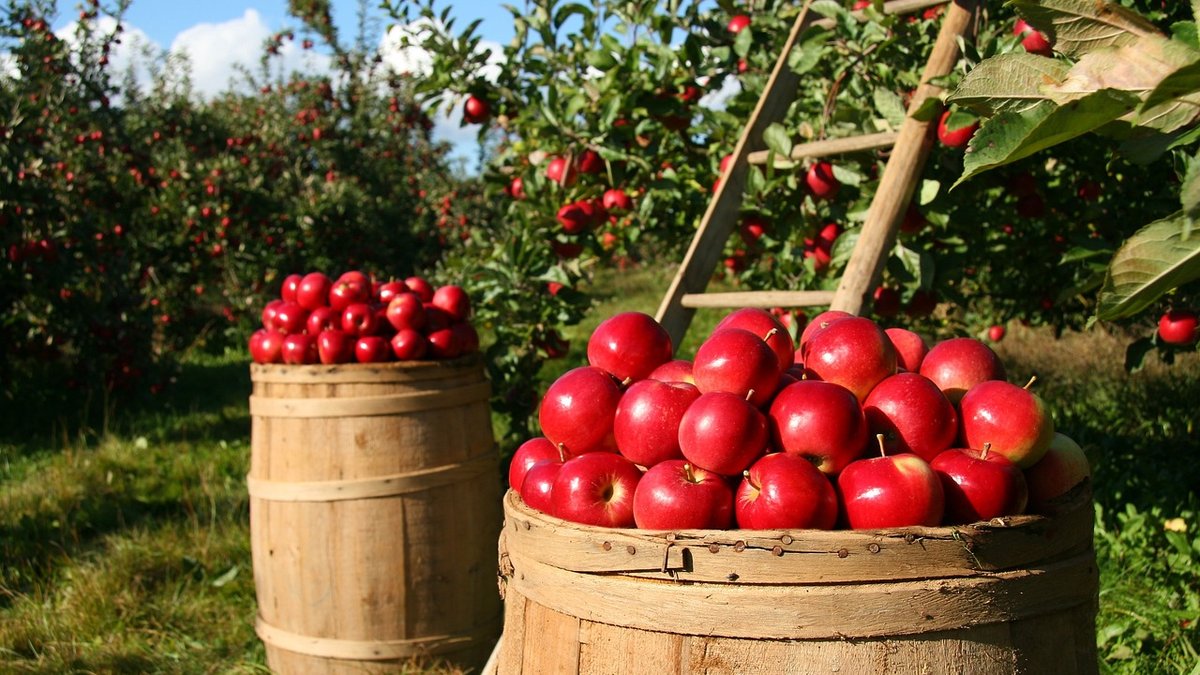
A fruit tree is a patient communicator. Long before a crop fails, the leaves, shoots and skin of the fruit begin to tell you what the roots cannot find. Learning to read those signals is one of the most useful skills an orchard keeper can develop, and it will save you a fortune on tonics and sprays you never actually needed.
Yellow leaves, stubby growth and bitter pit are the classic trio of complaints, and each points in a different direction. The trick is to diagnose slowly, feed sparingly and always let the soil tell you the truth first.
Most nutrient problems in British orchards are really soil problems in disguise. Before you buy anything, find out what you are working with. A proper laboratory soil analysis costs very little and will tell you the pH plus the levels of phosphorus, potassium and magnesium, which is far more reliable than any colour chart held up against a leaf.
For apples and pears, aim for a pH between 6.0 and 7.0. Plums and cherries prefer it slightly higher. On acid heathland soils, nutrients become locked up; on thin chalk downland, iron and manganese are the ones that disappear. A simple pH test kit from a garden centre will get you started, and a full analysis every four or five years is money well spent.
Bitter pit is the heartbreak of Cox's Orange Pippin growers everywhere: small sunken brown spots on the skin, with corky tissue beneath, often appearing only after a few weeks in store. It is almost never caused by a genuine shortage of calcium in the soil. It is a transport problem. Calcium moves with water, so erratic irrigation, over-vigorous pruning, heavy nitrogen feeding or too much potassium competing for uptake will all bring it on.
Calcium nitrate foliar sprays, applied several times from just after petal fall through to midsummer, are the standard remedy. Even watering, lighter pruning and thinning a heavy crop all help the tree move what it already has. Do not lime unless a soil test says to; adding lime to an already alkaline soil will simply lock up other nutrients.
Heritage fruit was selected in particular places for particular reasons. A Herefordshire cider apple that thrived on deep clay may sulk badly on thin chalk, while a russet bred for the drier east can struggle in the wet west. Rootstock matters just as much: trees on M9 and M27 are shallow-rooted and hungry, needing more feeding and watering, whereas MM106 and M25 forage more widely and tolerate rougher treatment.
Before blaming the variety, look at the ground. Old orchards that have been grazed or mown for decades are often compacted, low in organic matter and short of potash. A generous mulch of compost or well-rotted manure each spring, kept clear of the trunk, does more for tree health than any bottle of tonic.
Overfeeding is a genuine problem. Too much nitrogen produces soft, sappy growth prone to aphids, canker and scab, and it makes fruit keep badly. Work on the principle that a modest annual mulch plus a balanced spring feed is enough for most established trees, and only intervene with specific nutrients when you have seen the symptoms and confirmed them with a test.
Keep a simple notebook. Record what you saw, when you saw it, what you applied and what happened the following season. Over a few years you will build up a picture of your own patch that no general guide can match, and your trees will reward that attention with heavier, better-flavoured crops.

Hi, my name is Anthony kuber. I am artist and fashion designer.
I love to travel and writing blogging.
Your email address will not be published. Required fields are marked *
Software Developer & Writer
Hey, I'm Diva, a developer and writer blending code and creativity. I'm driven by a deep curiosity and a relentless pursuit of excellence. Join me as I craft digital solutions and captivating stories.


